
Drafting Tips From a 1970s Drafter
Opinion by Ralph Grabowski
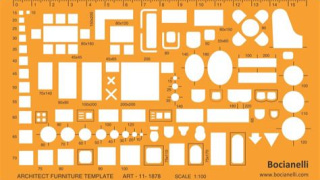
Stencil for drawing common furniture shapes quickly
My father was a drafter for a time, so it was natural for me to take in the drafting class offered by my high school.
On the first day of class, a dozen guys showed up, and for our first homework assignment, we had to practice lettering at home.
For me, having been already exposed to the neat lettering required for drawings, it was a natural. Letters are written with a specific style so that words on drawings are perfectly clear; no ambiguity allowed!
(This is why, when CAD and plotters first arrived, we examined the lettering they produced closely. In the early days, sales of CAD systems could be rejected on the basis of the quality of CAD-generated fonts, much to the dismay of salesmen.)
In the figure below, the tiny numbers show the stroke order and direction. I still do some of my handwriting mimicking these strokes. (Image credit Archi-monarch.)
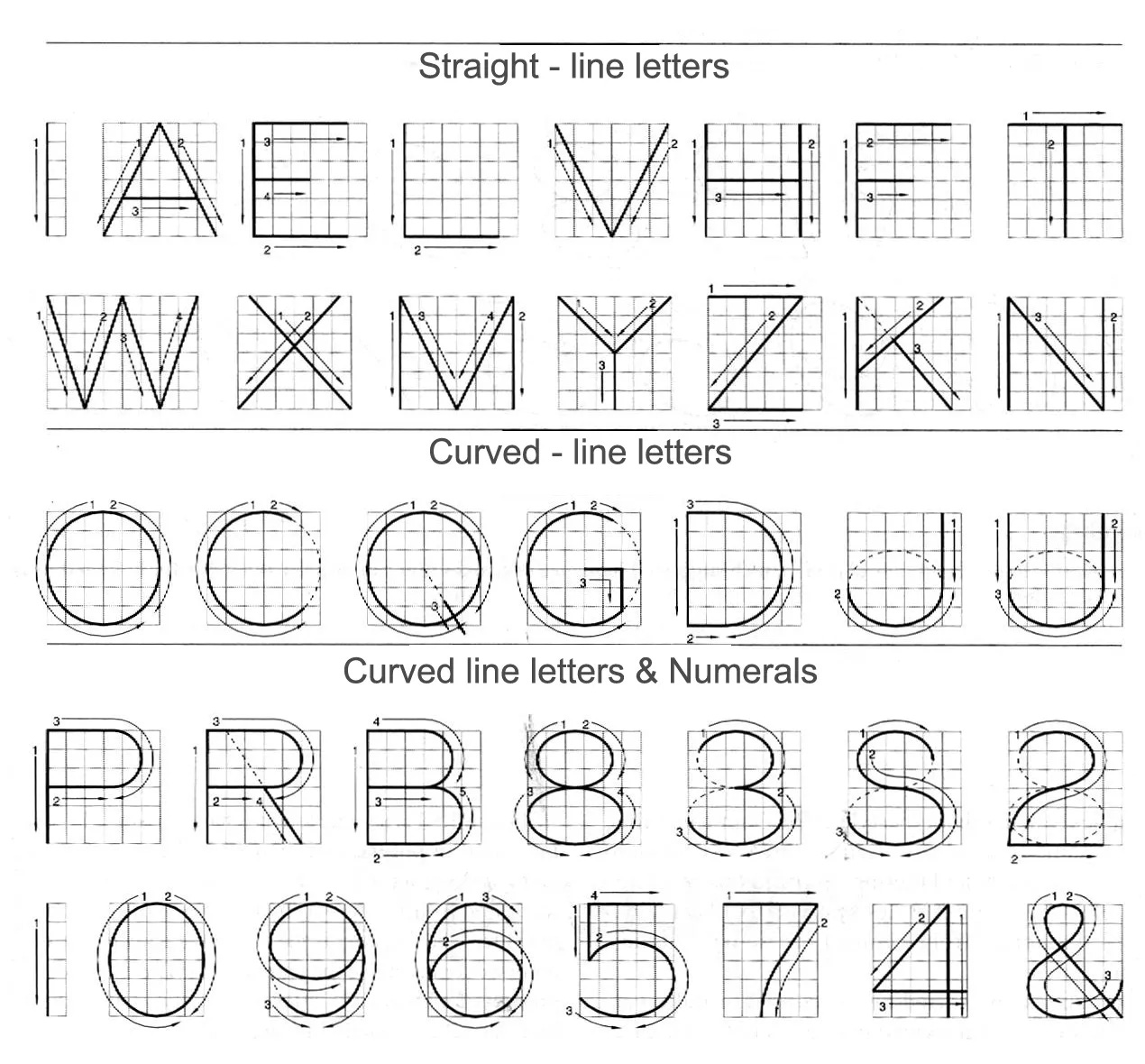
Precise lettering through consistent stokes
Never mind. The assignment had the effect intended by the teacher. The next day, just three of us returned. The instructor had wanted only those in his class who were truly enthusiastic about drafting.
That was 1972. In 1985, I began using CAD with AutoCAD v1.4, the demo version. Hand drafting requires knowledge of technique; CAD does, too, but in different ways. Here are some of the techniques we used, back in the day, which, thanks — or no-thanks — to CAD, we no longer need.
Keep Orthogonal Lines Orthogonal
When drawing freehand, we were taught to first draw all horizontal lines at a time, then all vertical ones, and then all diagonal ones — just like for lettering. Lines turn out straighter than they would when switching repeatedly between the various directions.
Keeping Ink from Bleeding
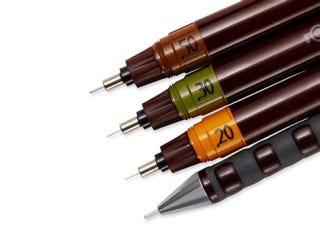
Technical pens for drawing and lettering with ink.
We drew straight lines and curves with triangles, protractors, French curves (see image below), templates (see image at top), and rulers. To keep ink from our drafting pens leaking under these pieces of plastic, we stuck bits of masking tape on the undersides. This produced just enough of a gap to halt capillary action, yet keep the templates close to the paper.
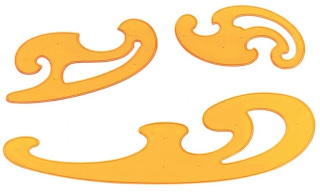
French curves for drawing non-circular curves
I loved ink pens, and even wrote my notes in university with them (see image below). But these pens were a pain, sometimes clogging up or leaking, and cleaning them was not easy. If you could afford it, you’d buy an ultrasonic cleaner; I couldn’t. Today, these pens are still available.
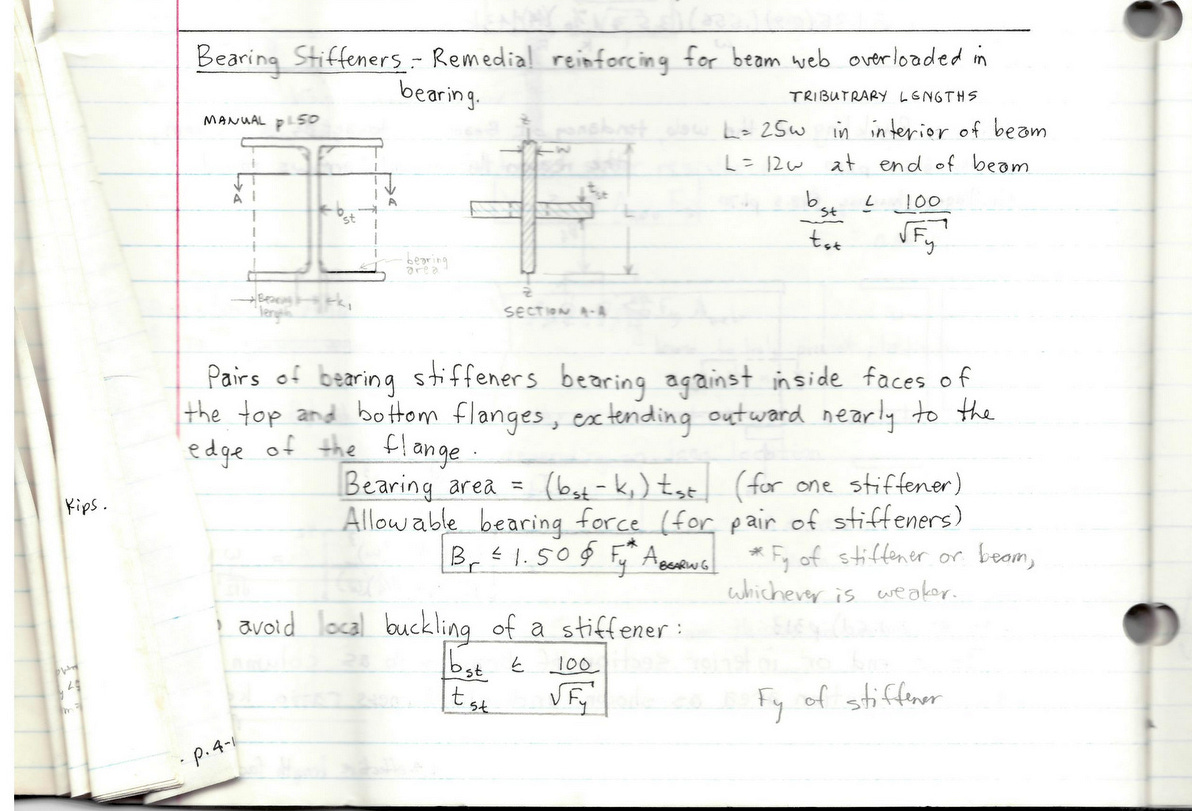
Some of the notes I took in the structural steel design course, the only course I ever failed in my seven years of university. I failed it twice. Failing teaches you either to try harder, or else learn what you’re not meant to do.
Keep Pencils Sharp
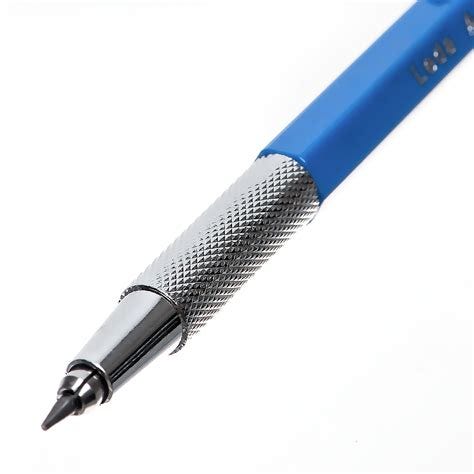
Mechanical pencil from the pre-Pentel era
All drawing was done with pencils, either the cedar-encased pencils the kind most people have used, or else mechanical ones (illustrated above). As we drew, we twirled the pencil to keep the lead (actually a mixture of clay and carbon) from forming a flat spot, which would widen the line. Twirling kept the pencil uniformly sharp and produced lines of consistent width.
Then Pentel invented the 0.5mm mechanical pencil with its plastic lead, making twirling obsolete.
Make Sketches Sparkle
Also, when doing freehand drawings, we left small gaps to the linework. This helped the drawing sparkle, and look less dead.
Hatching, the Worst
I loved dimensioning, because it signaled that the drawing was coming to an close. The worst, however, was hatching. Tediously drawing a diagonal line over and over, correctly spaced. The killer was when I drew hatch lines into the corner, because psychologically I wanted to draw the lines closer and closer together. Must. Not. Do. That.
The soullessness of CAD was redeemed by its perfect hatching.
The Drafting Process
At the engineering firm for which I worked, engineers did all the drawings with pencils. We handed our D-size sheets over to the drafting department, which traced over our drawings with ink on mylar, and reproduced the text with a lettering machine. An ammonia-based machine made copies.
The engineering firm twice considered CAD while I was there. The Intergraph station was too expensive, at $100,000 a station. AutoCAD running on a PC was felt to be too underpowered for the time.
In 1984, one month before my wedding, the firm laid me off, due to the economic recession. In 1985, I began writing about AutoCAD. Then, the firm purchased Anvil CAD as its first CAD system.
As much as I loved doing transportation engineering, writing about CAD proved to be a richer experience for me.
I remember being told, at High School and it was entirely justified, that I could be a good drafter but for my printing. Then tech insisted on printing for assignments. I guess CAD arrived at the right time for me!
In the early days of tablets, I captured my scrawl as a TrueType font.
https://www.robincapper.net/character-amnesia-and-the-death-of-handwriting/